
Read the planogram record
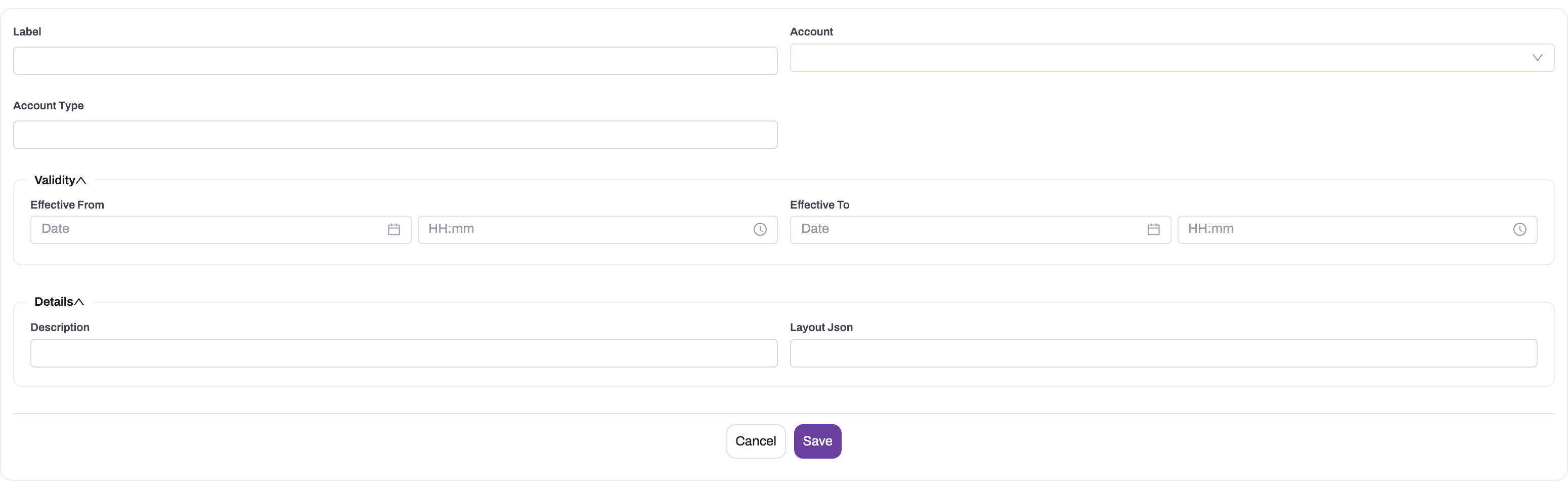
- 1
Label gives the expected shelf arrangement a clear operational name.
- 2
Account and Account Type determine which outlet population can match.
- 3
Effective From is evaluated against the server's current UTC, not the visit date.
- 4
Effective To retires the definition for future resolution.
- 5
Layout JSON stores the structured shelf, position, product and facing expectation.
The planogram header determines which expected shelf can be selected for an audit. Label makes the arrangement recognizable, Account and Account Type establish the outlet scope, and Effective From/To bound the period in which the definition is eligible. Description carries human instructions, while Layout JSON is the structured shelf, position, product and facing model used by analysis and downstream presentation.
Avoid overlapping planograms at the same specificity unless the selection rule is deliberate. Validate product identities, own-brand flags, shelf order and facing expectations with merchandising before activating a window, and close the old window instead of overwriting an arrangement already audited. The current server resolver evaluates effective windows against current UTC, not the visit date. When a historical result looks wrong, compare the resolution time and outlet scope, then the photo quality and exact selected planogram.
A planogram in xMatix is a record of what the shelf is supposed to look like — shelves, positions, products and expected facings — that merchandising audits are judged against. The executive's side of retail execution is the Merchandising Audit activity on a visit: count facings, rate compliance, photograph the shelf. The analysis side — reading those shelf photos and scoring them — is done by Sense AI and produces shelf audit results that attach back to the same activity, so the visit record carries both what the rep observed and what the analysis found.
The planogram record
A planogram holds the structured expectation (shelves → positions → product → expected facings), an optional reference photo, a lifecycle status — Draft, Active, Retired — and an effective date window. Only Active planograms inside their window are used for evaluation.
Which planogram applies to an audit is a scoping decision among records active at the server's current UTC time:
| Scope | Applies to |
|---|---|
| Outlet | Exactly one customer account |
| Outlet class | Every account of a type (e.g. supermarkets) |
| Tenant-wide | Everything else — the default when no narrower planogram matches |
The narrowest matching scope wins, so a chain-wide standard can coexist with a store-specific exception.
The audit on the visit
The Merchandising Audit activity captures the human read of the shelf: facings counted per product, a planogram-compliance rating, share-of-shelf and hygiene observations, and the shelf photos. It is a normal visit activity — defined by the task template, completed offline if need be, photos queued for upload like any other capture (see Checklists and tasks).
Shelf audit results
Once the photos sync, analysis produces a shelf audit result attached to the activity: a compliance score (0–100) and status — Compliant, Partial, Non-compliant, or Unable to Assess — structured findings such as missing or misplaced products and facing shortfalls, the measured share of shelf overall and per brand, and the total facings detected. Each analysis run is kept as its own result row, so a re-analysis adds history rather than overwriting the earlier judgment. Results are also stamped with the visit and outlet, making compliance and share-of-shelf reportable across routes and time.
The executive sees the latest result as a card on the activity itself. One practical note: results exist only after the photos have synced and the analysis has run server-side, so viewing them needs connectivity — unlike the capture, which works offline.
Shelf products
Share-of-shelf numbers are only as meaningful as the product identities behind them. The shelf product catalog maps each recognized detection label to a display name for reporting, optionally rolls labels up into clusters, and — decisively — flags which products are own brand: that flag is the numerator of share of shelf. How the photo analysis itself works, and how it is administered, is covered with the rest of Sense AI in the Knowledge Center.
Common questions
Do I need a planogram to measure share of shelf?
No. Share of shelf comes from what is detected in the photos and the own-brand flags — an audit without any applicable planogram still yields share-of-shelf results. The planogram is only needed for the compliance judgment.
Who maintains planograms?
Trade-marketing or sales-ops users on the web: they author the layout, scope it (outlet, outlet class, or tenant-wide), set the effective window and activate it. Executives never pick a planogram — the applicable one is resolved automatically for each audit.
Why does a result say "Unable to Assess"?
The analysis could not reach a confident judgment from the submitted photos. Re-shooting the shelf — closer, straighter, better lit — and letting the activity re-sync typically resolves it; each re-analysis lands as a new result row.